Alternatives North has sent a letter to the Honourable Jay MacDonald, NWT Minister of Environment and Climate Change, asking the Government of the Northwest Territories to act before oilsands tailings are released into the Athabasca River.
The concern
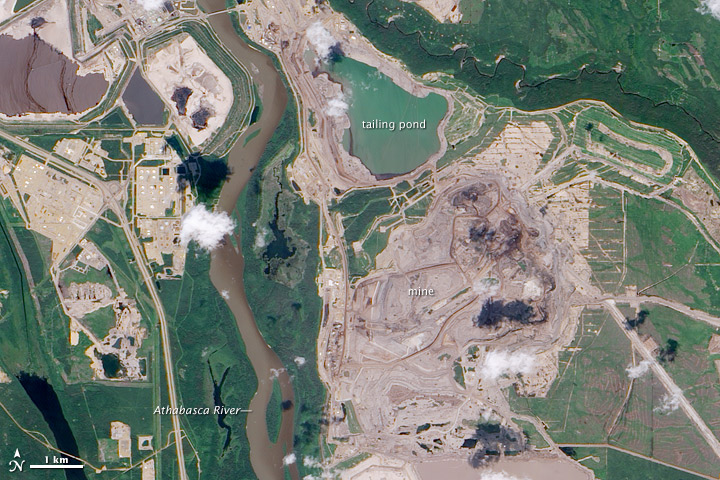
The Alberta Energy Regulator (AER) has endorsed a plan by Suncor to release tailings from its tailings ponds into the Athabasca River after treatment. Alternatives North members are concerned that the practice will not stop with Suncor. The seven other major companies mining the oilsands, each with its own tailings ponds near Fort McMurray, can be expected to follow, with the combined discharge reaching the whole Mackenzie River watershed.
The treatment technology
The treatment process is described as “nanofiltration and membrane technology.” Alternatives North reviewed the annual tailings reports that oilsands operators are required to file with the AER. From 2022 to 2025, every one of those reports described the cleaning technology as “improving.” In the letter’s words, that indicates a technology that is still evolving and not yet perfected. The reports do not provide evidence that treated tailings are completely clean and safe, or that treatment removes all harmful toxins and metals, including polycyclic aromatic hydrocarbons (PAHs), salt and sediment.
No environmental assessment required
A July 16, 2026 letter from the AER’s Specialist in Regulatory Affairs to Suncor carries the heading “Environmental Impact Assessment Report Not Required.” The body of that letter states that Suncor’s project is not a mandatory activity for purposes of environmental assessment. Alternatives North notes that the AER’s own website says protecting the environment, including water, is part of its mandate, and that any energy or mineral project involving water is under its authority.
What the NWT can do
The letter points to the Mackenzie River Transboundary Waters Master Agreement (1997) and the Mackenzie River Basin Bilateral Water Management Agreement between the NWT and Alberta (July 2015) as the primary tools available to the GNWT. Alternatives North says that releasing the effluent into the Athabasca River would run counter to key terms of the 2015 agreement:
- Prior notification. The agreement calls for early, transparent and proactive communication with the NWT about activities, regulatory changes or incidents that could affect shared downstream waters.
- Ecosystem protection. The agreement’s core objective is to maintain the ecological integrity of transboundary waters, so that downstream water quality, biological diversity and ecosystem health are not degraded by upstream industrial activity.
- Indigenous governance and rights. The agreement commits both jurisdictions to respecting Indigenous rights, incorporating Traditional Knowledge, and involving affected First Nations, Métis and Inuit communities.
- Trust and good faith. Proceeding with water release plans that have not been adequately studied or vetted undermines the mutual trust on which transboundary water management depends.
Cumulative impacts and downstream health
The letter notes that the main source of oilsands pollution is already well documented: emissions from the stacks at the industrial sites, which deposit a range of toxic materials on the land, affecting the animals and plants that are harvested. Those materials are washed into rivers by rainfall and spring snowmelt. Few studies have examined these impacts, and no health study has been done on the people living immediately downstream in Fort McKay and Fort Chipewyan, where a high number of cancer deaths, including rare cancers, has been reported despite small populations.
Downstream communities draw drinking water from the Peace-Athabasca Delta and Lake Athabasca, the Slave River and Great Slave Lake. Conventional municipal water treatment is designed for microbial pathogens and suspended solids, not complex industrial organic mixtures such as naphthenic acids. Even if acute toxicity is mitigated, chronic low-dose exposure through traditional foods such as local fish and wildlife remains a major concern because of heavy metal bioaccumulation.
The letter also states that there are currently no finalized regulatory effluent limits specific to oilsands tailings water discharge, and that adding partially treated tailings fluid would measurably increase the toxin load the river already carries downstream.
The request
Alternatives North urges Minister MacDonald and the Government of the Northwest Territories to act swiftly and do everything in their power to stop the release before it begins.
Alternatives North is a Yellowknife-based social justice coalition. Letter dated September 28, 2026, signed by Ben McDonald for Alternatives North.